Hereditary Defects
Here I would like to go into some genetic defects that also occur in Birman breeding (autosomal recessive inheritance), which means that with this mode of inheritance both parents carry the responsible gene!
unfortunately, so-called autosomal recessive genetic faults such as kinked tails, squinting and nystagmus sometimes occur in Birmans too. This takes nothing away from the charm of these wonderful cats and is usually not important for the cat or its owner,
as long as these cats are not used for breeding...
Unfortunately there are always "breeders" who breed with such cats anyway :-(( I know of several females and males that obviously squint and are or were used "firmly" for breeding, and whose offspring are also sold for breeding. Entire lines have been co-founded with these cats....sadly :-(( I also know of a cross-eyed male (I have looked into his eyes myself) who was offered online as a stud .... I also know of a beautiful Seal Point stud with a chin spot whose owners don't hesitate to present this male on their website and at shows and to sell his offspring for breeding!!! Others do still have a guilty conscience and only show their chin-spot cat on their website dyed or made up ;-)
THIS IS ABSOLUTELY UNACCEPTABLE; FOR A GOOD BREEDER THIS IS AN ABSOLUTE NO-GO
When talking with other breeders, I sometimes hear the statement: this has never happened in my lines/in my cattery!
I have a more nuanced opinion on that:
such cosmetic flaws have indeed occurred in my cattery before. I'm not afraid to write this here, I have no need to lie....
So where do these defects come from.............after all, I bought my cats as breeding cats from breeders (I want to make it absolutely and expressly clear that I am not blaming the breeders of the cats I bought!), and these breeders got their cats from somewhere too... and supposedly no breeder has such genetic defects in their lines....haha!!!
If a kitten like this (with one of the genetic defects mentioned above) is then born from a mating with an outside stud, then of course the stud is to blame .... or the purchased female.....
To those people who fool themselves like this, let me say the following:
Genetic defects such as kinked tail, chin spot, squint and nystagmus are inherited in an autosomal recessive manner, i.e. if such a kitten is born, both parents are carriers of this defective gene ...
such defective genes can be carried hidden over many generations.
So it is not automatically just the breeder of a cat who is to blame if that cat's kittens squint or have a kinked tail. Perhaps this defect never appeared with the cat's breeder or among its littermates ..., but rather with the grandparents/great-grandparents etc. of the kittens in question.
My principles:
I do not breed with cats that show a defect such as squinting, nystagmus, kinked tail or chin spot.....
I do not sell cats with such defects for breeding.
I am honest, even if it sometimes harms me :-)))
Conclusion:
I cannot promise a cat owner who brings her female to my stud that the defects mentioned above will not appear in a mating, because I cannot know for how many generations my male has been carrying genetic defects unknown to me..... likewise, I cannot promise this to the buyer of a breeding cat from my cattery..... nobody can.
If someone promises you that their lines are absolutely free of such genetic defects, you should be careful...
Do pedigree research...
Study genetics books, attend genetics seminars and don't believe everything....
Autosomal recessive
here are some charts showing how autosomal recessive inheritance works
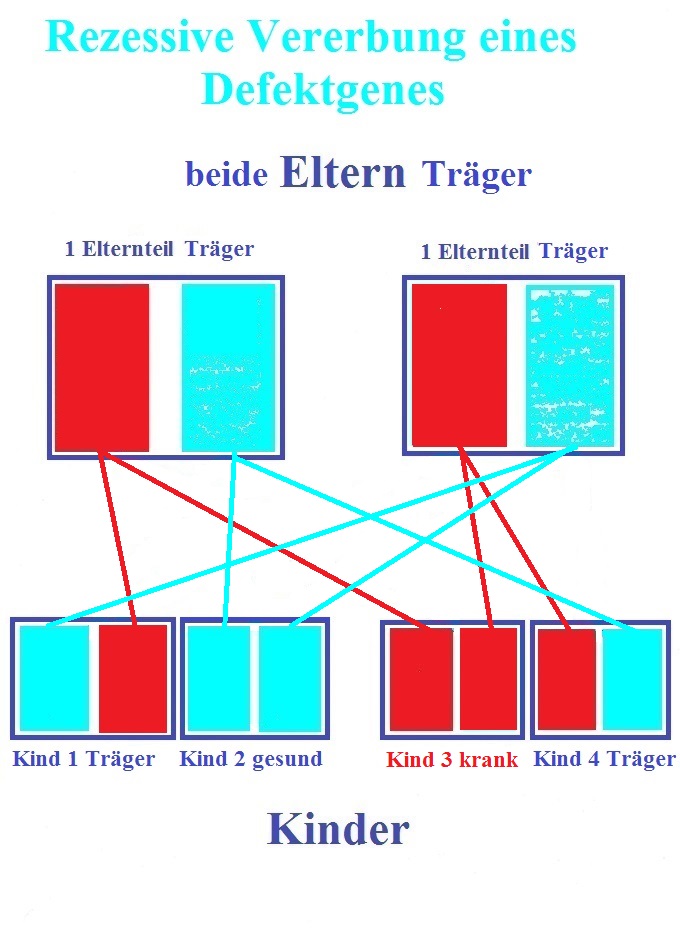
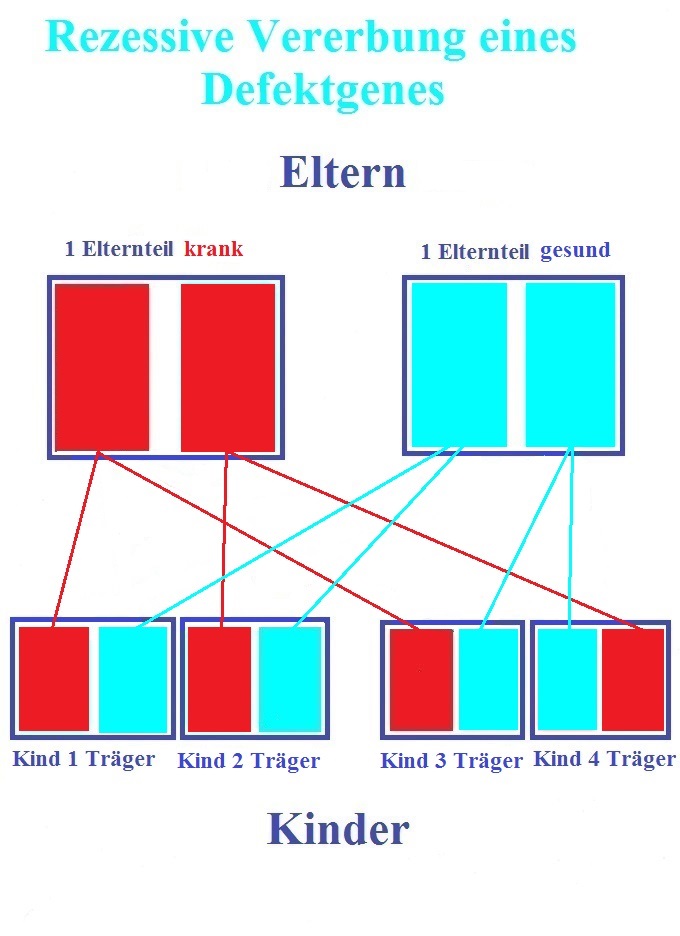
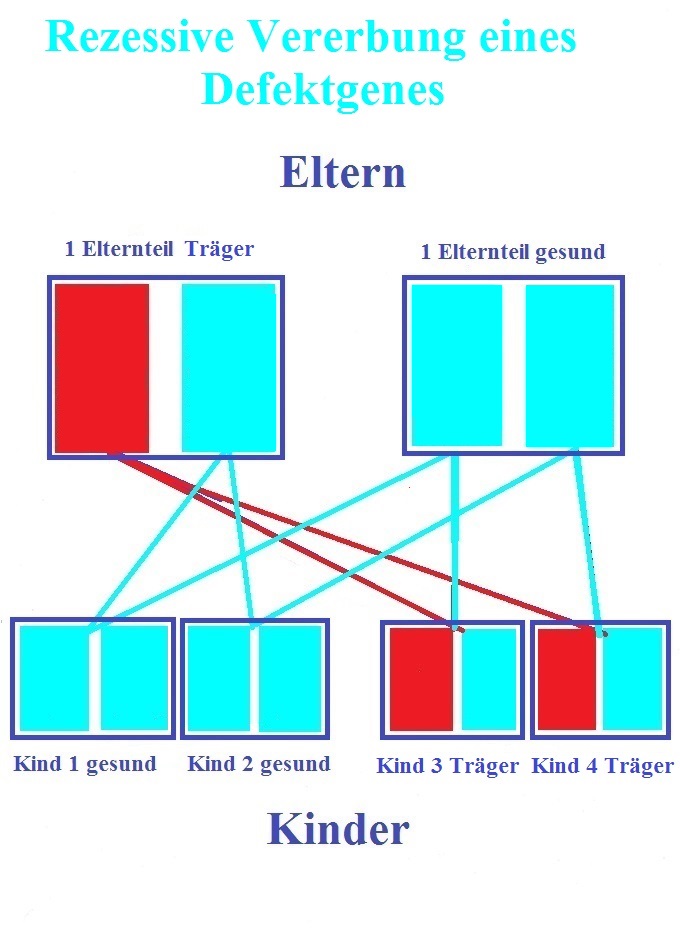
Here is a list
Kinked tail
Squinting/nystagmus
Hernia cerebri (open skull)
Cleft palate
Entropion (rolled eyelid)
Hereditary hairlessness and sparse coat
Mucopolysaccharidosis
Hereditary tremor
Cryptorchidism (one testicle)
Split hand
Pectus carinatum (pigeon chest)
Autosomal dominant
autosomal dominant means it is enough for one parent to carry the defective gene for the disease or hereditary defect to show..........according to Mendel's laws, about half of the offspring are then affected by this hereditary disease and fall ill, while the other half of the offspring are heterozygous carriers of the disease.
a distinction is made between homozygous animals, meaning both parents carry the gene, and heterozygous animals, meaning only one parent carries the defective gene
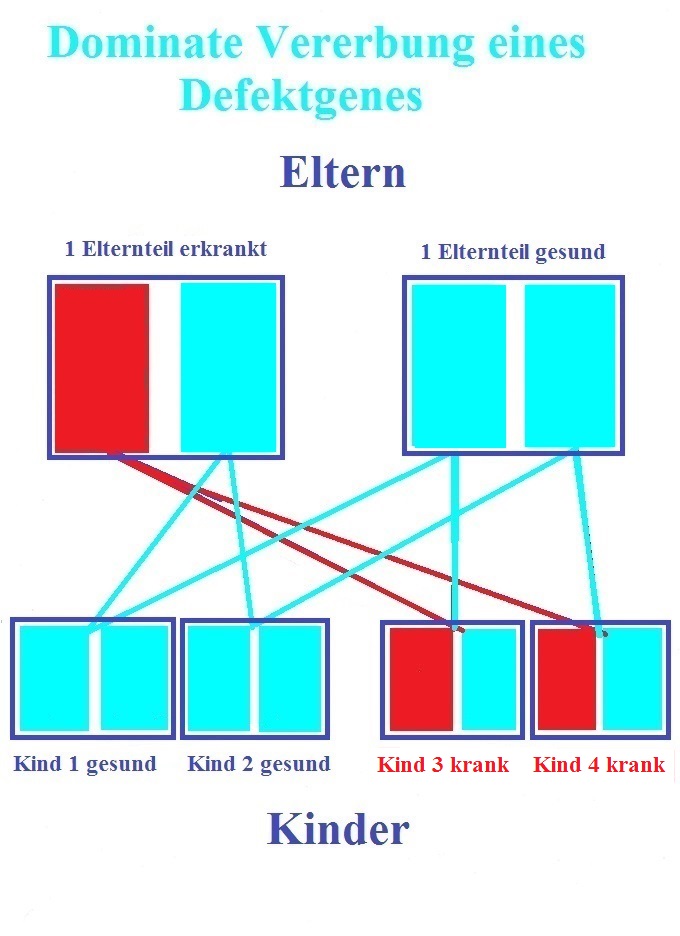
here is a list of some diseases that can be inherited dominantly
Defects of the ear flap (double ears)
Hereditary deafness (in white cats)
Congenital cerebellar ataxia (movement coordination disorders)
PKD (although there could also be a recessive mode of inheritance here)
Polydactyly/adactyly (too many or too few toes)
Hip dysplasia
Funnel chest
Manx factor