What it's about
Since 2015 there has been a genetic test for resistance to FIP. I make my work public because other breeders can benefit from it.
This is my opinion and my work. I am not a vet, and mistakes are possible.
My breeding programme
I have been testing since 2015, since 2021 with Genimal in France, and I pair my cats based on the results. This way you can breed FIP-resistant cats in 3 generations.
Our FIP-R programme
I have tested all my cats since 2015. This is how my values have developed:
FIP resistance is a hereditary trait, not a test for FIP. Only tested cats are counted, by year of birth.
What the values mean
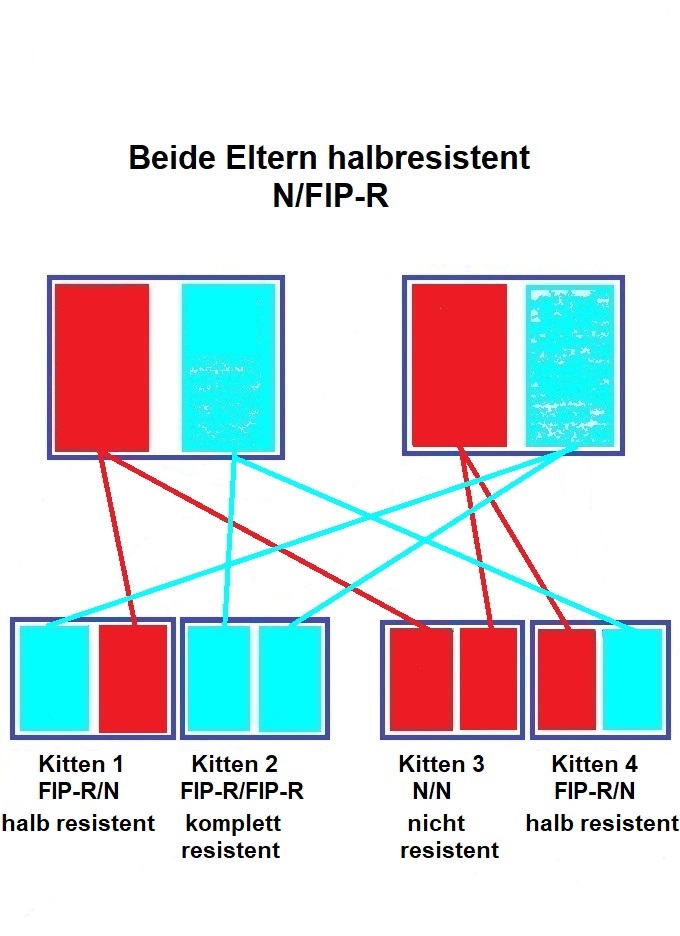
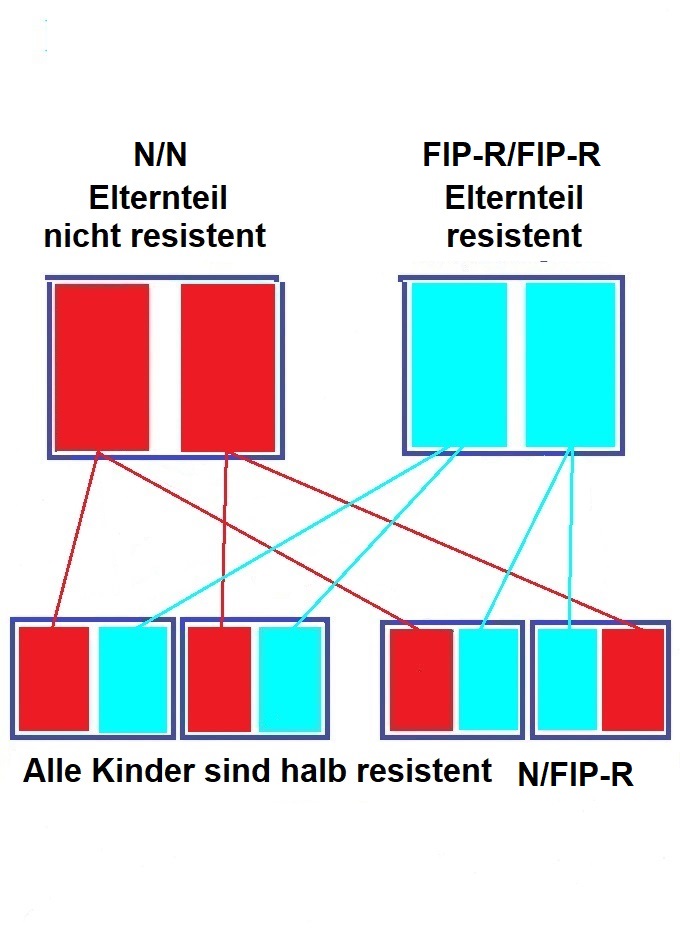
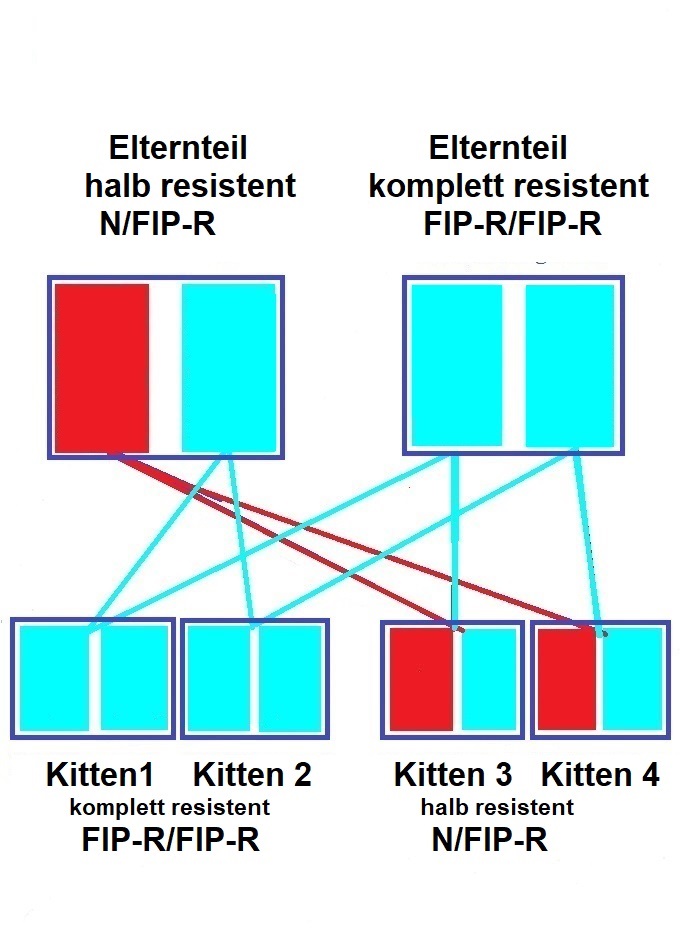
Every cat inherits one allele from the mother and one from the father.
Not resistant to developing FIP.
One resistant allele. It is dominant, so the cat is protected.
Inherited the good gene from both parents.
Inheritance chart for my future litters
Kittens 50 % FIPR/FIPR, 50 % FIPR/N
Kittens 25 % FIPR/FIPR, 50 % FIPR/N, 25 % N/N
The 3 pillars of prevention
Breed cats that are resistant on one or two alleles.
A healthy gut strengthens the immune system against the coronavirus. Good food is part of that.
Stress makes you ill, and that goes for our sensitive little Birmans too. So avoid stress!
Our corona study with LMU München (2017)
- 10 cats, faecal samples for 4 weeks, followed by an antibody test
- 9 out of 10 had antibodies against coronaviruses
- in 9 out of 10, no coronavirus was found in the faeces
From their 3rd week of life, our cats get good gut bacteria in their food every day.
For breeders: the path to success
Including the studs you visit for outside matings.
One of the two partners should have good values.
Show quality comes second for now.
The other kittens are sold as usual.
In 3 to 5 years you will have cats with good values. In my cattery, FIP mortality went down.
From “bad” to “good” in three generations
- P litter 2017: Kami × Quintin, poor × poor, Poppi stays
- T-Wurf 2019: Poppi × Guerlain, poor × good, Tilda stays
- Z-Wurf: Tilda × Roddy, resulting in Zansa, FIPR/FIPR
A test costs about 60 euros. If you lose 2 kittens a year to FIP, the tests for your whole cattery will quickly pay for themselves.
A poor result does not mean the cat will die of FIP. With the right partner, you can breed out the poor values.
Laboratories
About 60 euros, fast, tests the first and most important gene. My recommendation.
http://www.genimal.com/test_ADN_chat.html
79.90 euros, discounted around Christmas, but very long waiting times.
Exchange among breeders
International Facebook group: https://www.facebook.com/groups/699263627387473
German group, mainly Birman breeders: https://www.facebook.com/groups/178895999119147
The international group prompted the LOOF to initiate a study at the University of Lyon.
Sources
- Genetic susceptibility to feline infectious peritonitis in Birman cats. Golovko L, Lyons LA, Liu H, Sørensen A, Wehnert S, Pedersen NC Virus Res. 2013 Ju
- The influence of age and genetics on natural resistance to experimentally induced feline infectious peritonitis. Pedersen NC, Liu H, Gandolfi B, Lyons LA. Vet Immunol Immunopathol. 2014 Nov 15;
- Polymorphisms in the feline TNFA and CD209 genes are associated with the outcome of feline coronavirus infection. Wang YT, Hsieh LE, Dai YR, Chueh LL. Vet Res. 2014 Dec
- Identification and genotyping of feline infectious peritonitis-associated single nucleotide polymorphisms in the feline interferon-γ gene. Hsieh LE, Chueh LL. Vet Res. 2014 May
The Winn Feline Foundation also points to the genetic test.